
webpack tapable
前言
在上两篇文章中,我们了解了 webpack 的核心构建过程,在其编译的过程中存在两个核心对象
- compiler: 负责整体编译流程
- compilation:负责编译 Module
在扩展 webpack 时,我们需要用到 plugin/loader,loader 已经在前文做了分析,对于 plugin 来说,Tapable 是实现 plugin 的核心。
Tapable
webpack 是一种事件流机制,它的工作过程是将各个插件串联起来,实现这一切的核心就是 Tapable
本质上 Tapable 实现了一套发布订阅模式,提供插件接口。通过 Tapable 注册事件,从而在 webpack 运行的不同时机去触发这些事件。
插件只需要监听对应的事件就能够加入到 webpack 的编译过程,从而影响到编译结果
内置钩子
exports.SyncHook = require("./SyncHook");
exports.SyncBailHook = require("./SyncBailHook");
exports.SyncWaterfallHook = require("./SyncWaterfallHook");
exports.SyncLoopHook = require("./SyncLoopHook");
exports.AsyncParallelHook = require("./AsyncParallelHook");
exports.AsyncParallelBailHook = require("./AsyncParallelBailHook");
exports.AsyncSeriesHook = require("./AsyncSeriesHook");
exports.AsyncSeriesBailHook = require("./AsyncSeriesBailHook");
exports.AsyncSeriesLoopHook = require("./AsyncSeriesLoopHook");
exports.
 = require("./AsyncSeriesWaterfallHook");
举个 🌰
const { SyncHook } = require('./lib/index');

const hook = new SyncHook(['arg1', 'arg2']);

hook.tap('tap1', function (args1, args2) {
  console.log('tap1', args1, args2);
});

hook.tap('tap2', function (args1, args2) {
  console.log('tap2', args1, args2);
});

hook.call('lucky', 'fbb');

// tap1 lucky fbb
// Ωtap2 lucky fbb- 实例化不同类型的 hook,需要传入一个字符串数组作为参数,其中数组中对应的字符串个数就是对应的参数个数
- 通过 tap 函数注册对应的事件,需要接受两个参数
- 第一个是意义不大的字符串标识位
- 第二个是注册的函数,调用时会执行该函数
- 通过 call 方法传入对应的参数,调用在 hook 上注册函数
hook 分类
- 同步 hook 表示注册的事件会同步执行
- 异步 hook 表示注册的事件会异步执行
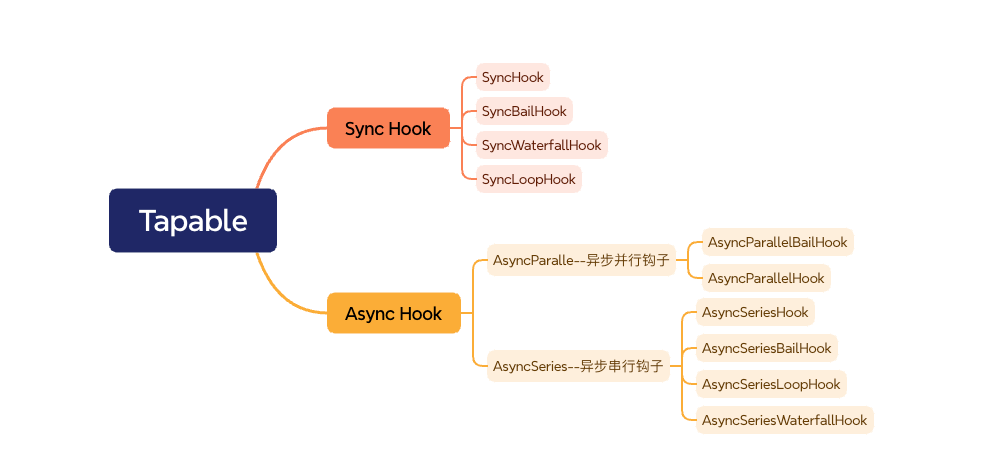
SyncHook 的 tap 方法是唯一的注册事件的方式,通过 call 方法来触发 syncHook
AsyncHook 可以通过 tap/tapAsync/tapPromise 三种方式来注册,对应的可以通过 call/callAsync/callPromise 来触发 asyncHook
执行机制分类
BasicHook
基本类型的钩子,它仅仅执行钩子注册事件,并不关心每一个调用的函数返回值是什么

WaterFallHook
瀑布流型的钩子,瀑布类型的钩子和基本类型的钩子没有太多的区别,不同的是瀑布型的钩子在执行回调函数的时候可以将非 undefined 返回值传递给下一个事件函数作为参数

const hook = new SyncWaterfallHook(['arg1', 'arg2']);

hook.tap('tap1', function (args1, args2) {
  console.log('tap1', args1, args2);
  return 'shuangxu';
});

hook.tap('tap2', function (args1, args2) {
  console.log('tap2', args1, args2);
  return undefined;
});

hook.tap('tap3', function (args1, args2) {
  console.log('tap3', args1, args2);
});

hook.call('lucky', 'fbb');

// tap1 lucky fbb
// tap2 shuangxu fbb
// tap3 shuangxu fbb
BailHook
保险型钩子,在基础类型钩子上增加了保险机制,如果任何一个返回了非 undefined 的值,那么整个钩子执行过程就会结束,之后的函数事件不会再触发
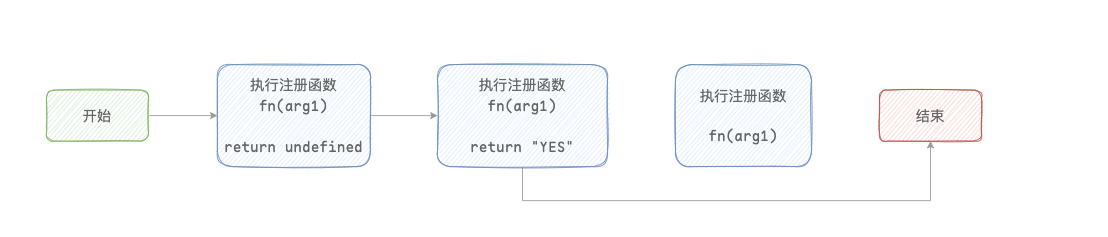
const hook = new SyncBailHook(['arg1', 'arg2']);

hook.tap('tap1', function (args1, args2) {
  console.log('tap1', args1, args2);
  return undefined;
});

hook.tap('tap2', function (args1, args2) {
  console.log('tap2', args1, args2);
  return 'YES';
});

hook.tap('tap3', function (args1, args2) {
  console.log('tap3', args1, args2);
});

hook.call('lucky', 'fbb');
// tap1 lucky fbb
// tap2 lucky fbb
LoopHook
循环型钩子,通过 call 调用时,如果任何一个注册的事件函数返回值非 undefined,那么会从头执行所有的注册函数,直到所有的注册函数返回 undefined
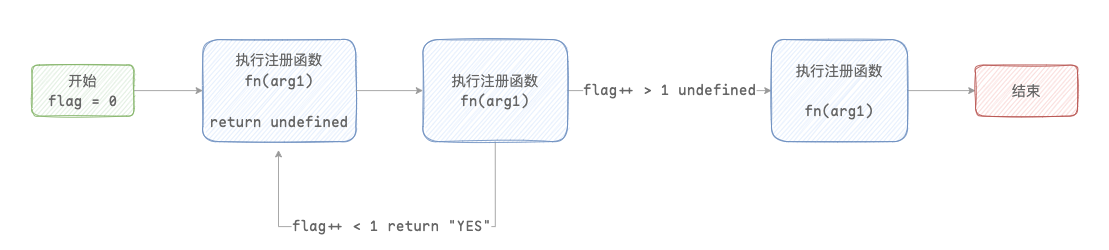
const { SyncLoopHook } = require('./lib/index');

const hook = new SyncLoopHook(['arg1', 'arg2']);

let flag = 0;

hook.tap('tap1', function (args1, args2) {
  console.log('tap1', args1, args2);
  return undefined;
});

hook.tap('tap2', function (args1, args2) {
  console.log('tap2', args1, args2);
  return flag++ < 1 ? 'YES' : undefined;
});

hook.tap('tap3', function (args1, args2) {
  console.log('tap3', args1, args2);
});

hook.call('lucky', 'fbb');

// tap1 lucky fbb
// tap2 lucky fbb
// tap1 lucky fbb
// tap2 lucky fbb
// tap3 lucky fbb
Tapable 实现原理
const { SyncHook } = require('./lib/index');

const hook = new SyncHook(['arg1', 'arg2']);

hook.tap('tap1', function (args1, args2) {
  console.log('tap1', args1, args2);
});

hook.tap('tap2', function (args1, args2) {
  console.log('tap2', args1, args2);
});

hook.call('lucky', 'fbb');
对于上述 SyncHook 最后调用 hook.call 时,Tapable 会动态编译出来如下代码
function fn(arg1, arg2) {
  'use strict';
  var _context;
  var _x = this._x;
  var _fn0 = _x[0]; //  _x[0] 是我们监听的第一个 tap1 对应的事件函数体。
  _fn0(arg1, arg2);
  var _fn1 = _x[1]; // _x[1] 是通过 tap 方法监听的 tap2 函数体内容
  _fn1(arg1, arg2);
}
同时会生成如下 hook 对象
const hook = {
  _args: [ 'arg1', 'arg2' ],
  name: undefined,
  taps: [
    { type: 'sync', fn: [Function (anonymous)], name: 'flag1' },
    { type: 'sync', fn: [Function (anonymous)], name: 'flag2' }
  ],
  interceptors: [],
  _call: [Function: CALL_DELEGATE],
  call: [Function: anonymous],
  _callAsync: [Function: CALL_ASYNC_DELEGATE],
  callAsync: [Function: CALL_ASYNC_DELEGATE],
  _promise: [Function: PROMISE_DELEGATE],
  promise: [Function: PROMISE_DELEGATE],
  _x: [ [Function (anonymous)], [Function (anonymous)] ],
  compile: [Function: COMPILE],
  tap: [Function: tap],
  tapAsync: [Function: TAP_ASYNC],
  tapPromise: [Function: TAP_PROMISE],
  constructor: [Function: SyncHook]
}
Tapable 做的事情就是根据 hook 中的内容动态编译上述函数体以及创建 hook 实例对象,最后调用 hook.call 方法时,会执行如下代码
// fn 为我们上述动态生成最终需要执行的fn函数
// hook 为我们上边 tapable 内部创建的hook实例对象
hook.call = fn;
hook.call(arg1, arg2);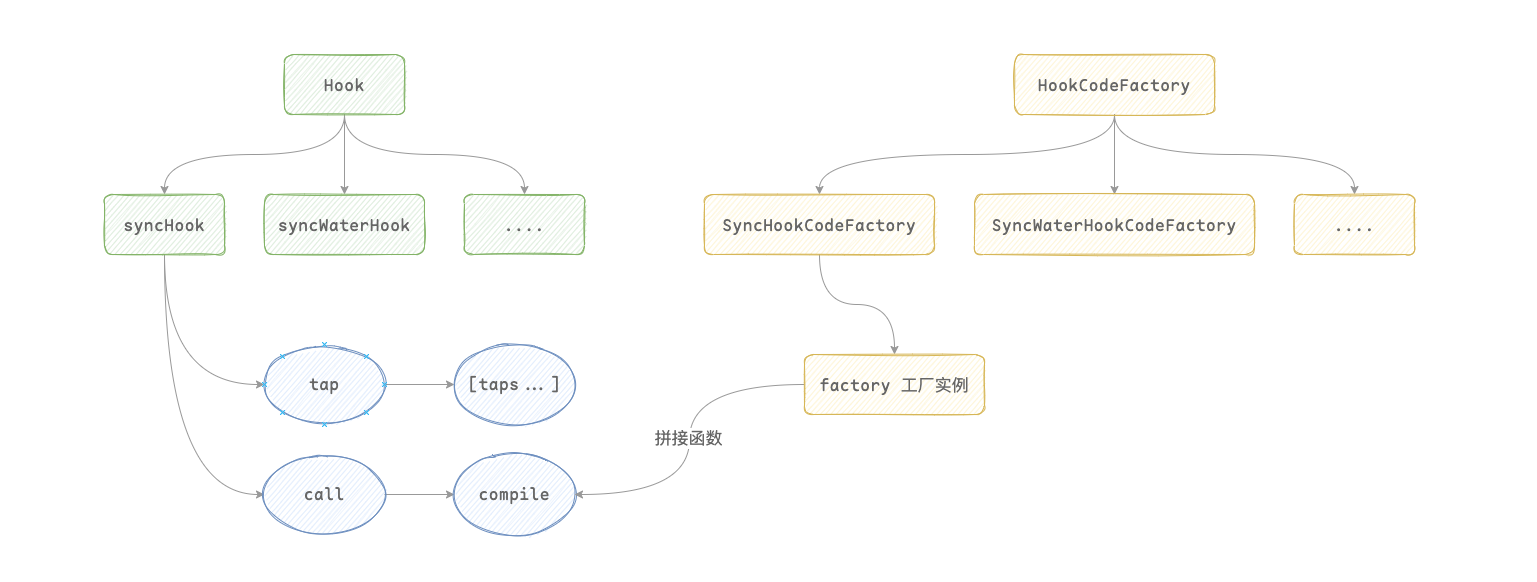
源码中分别存在两个类去管理这两块的内容:
- Hook 类,负责创建管理上边的 hook 实例对象
- HookCodeFactory 类,负责根据内容编译最终需要通过 hook 调用的 函数 fn
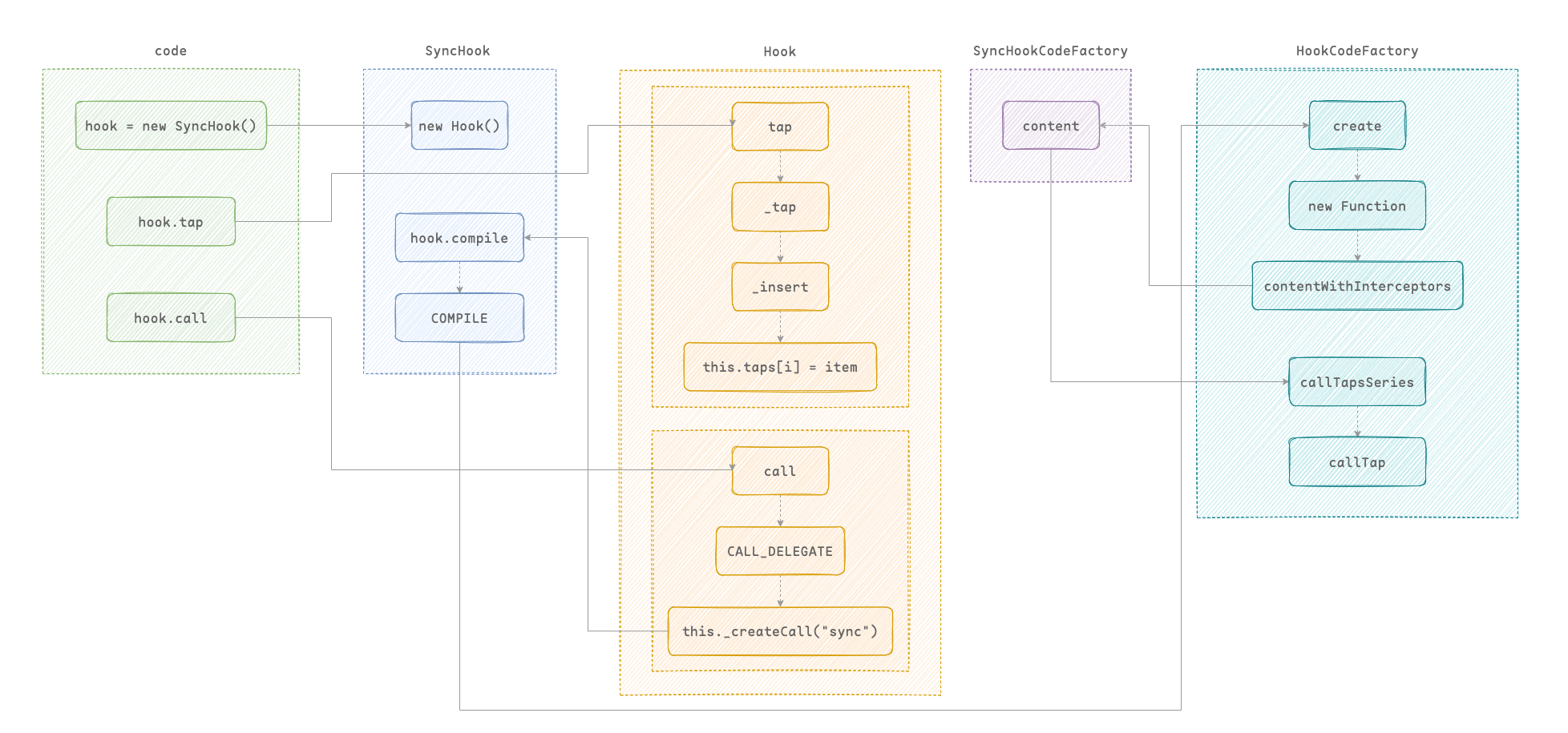
Tapable 和 webpack 的关系
在 webpack 编译时,存在 Compiler 和 Compilation 两个对象,webpack 在初始化的时候会给这两个对象创建一系列的 Hook 对象保存在各自实例对象中
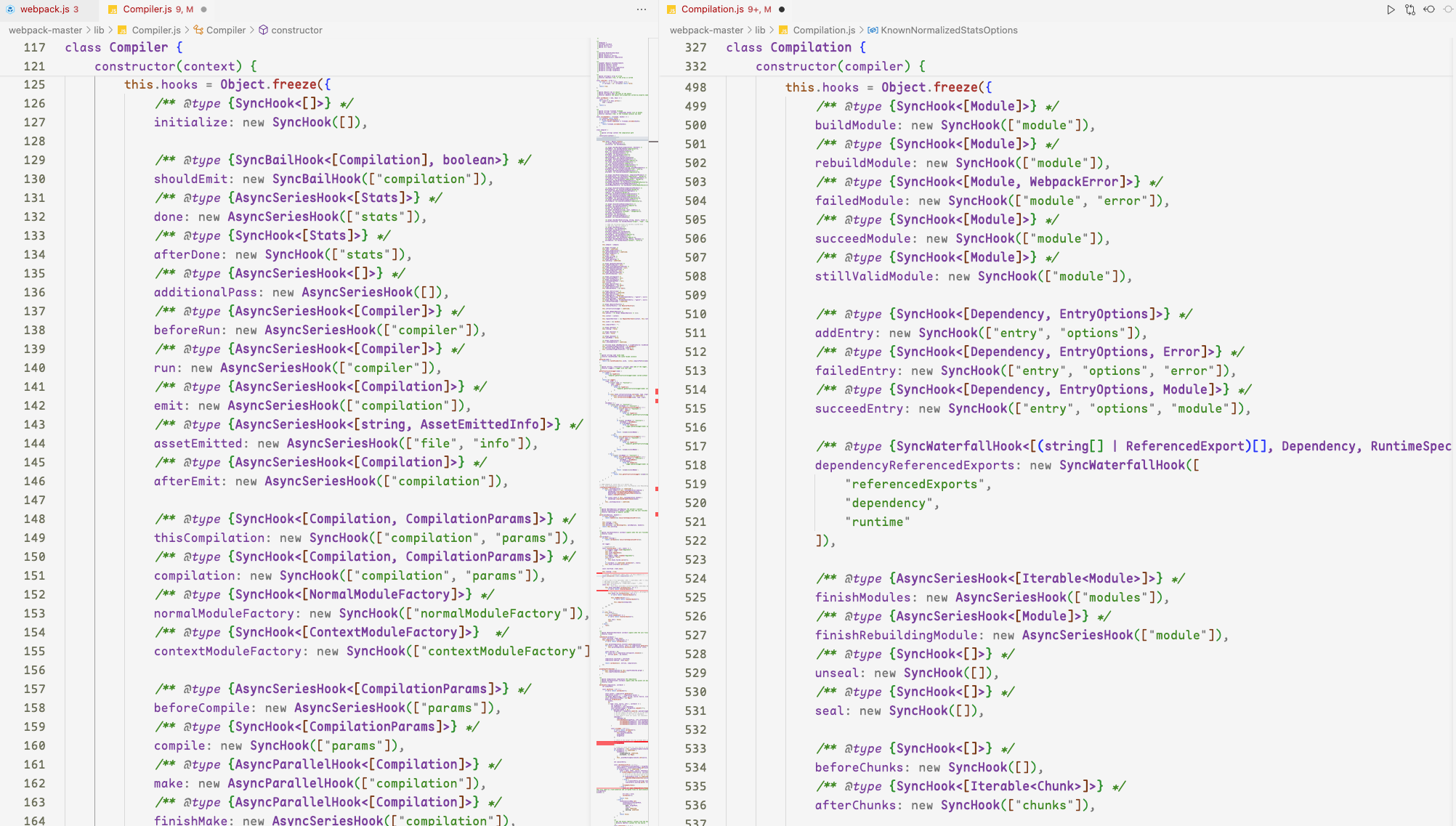
在进行 webpack plugin 开发的时候,会基于 Hook 在不同时机注册对应的事件,从而影响最后的编译结果
总结
简单介绍了 Tapable 相关 Hook 以及实现原理,Tapable 也是 webpack 实现的重要一环